
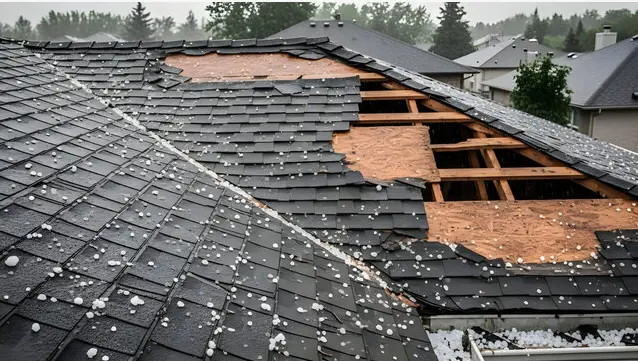
A small roof leak may not seem like an urgent problem. You might only notice a small ceiling stain, a few drops of water during heavy rain, or a damp spot in the attic. However, even a minor roof leak can lead to more serious problems when it is left unrepaired.
Water does not always appear directly below the damaged area of the roof. It can travel along the roof deck, rafters, insulation, and other building materials before becoming visible inside your home. This means a small stain on the ceiling may be a sign of a larger problem above it.
For homeowners, the key is to identify the source of the leak and address it before moisture has time to spread.
Can a Small Roof Leak Really Cause Major Damage?
Yes. A small roof leak can cause significant damage if it continues over time.
The amount of visible water is not always a good indication of how much damage is occurring inside the roof system. A slow leak may repeatedly wet the same areas of the roof deck, insulation, framing, or ceiling.
Over time, this moisture can contribute to:
- Damaged roof decking
- Wet or damaged insulation
- Ceiling and drywall damage
- Wood rot
- Mold growth
- Damaged paint and finishes
- Moisture inside wall cavities
- Potential damage around electrical components
The longer the source remains active, the more materials can be affected.
Why Does a Small Roof Leak Become a Bigger Problem?
Water naturally follows the path of least resistance. When it gets beneath roofing materials, it may travel along the roof deck or framing before reaching the ceiling.
This creates an important problem: the location of the ceiling stain may not be the location of the roof leak.
For example, water could enter near a roof penetration or damaged shingle and travel several feet before dripping into the attic or living space. By the time you see the stain, moisture may already have reached other materials.
What Damage Can a Small Roof Leak Cause?
1. Ceiling and Drywall Damage
A ceiling stain is often one of the first visible signs of a roof leak.
Continued moisture can cause drywall or ceiling materials to:
- Become discolored
- Bubble or peel
- Soften
- Crack
- Sag
- Require replacement
Painting over a water stain without fixing the source does not solve the problem. If water continues entering the home, the stain can return, and the underlying materials may continue deteriorating.
2. Wet Attic Insulation
Roof leaks can allow water to reach attic insulation.
Wet insulation may lose some of its effectiveness and can remain damp if the area does not dry properly. Moist insulation can also contribute to a wider moisture problem inside the attic.
If insulation has been repeatedly exposed to water, it should be inspected to determine whether it can be dried and retained or needs replacement.
3. Roof Deck Damage
The roof deck sits beneath the roofing materials and provides structural support for the roof covering.
If water repeatedly reaches the roof deck, prolonged moisture exposure can cause deterioration. What begins as a roofing repair may eventually require damaged sections of decking to be replaced.
This is one reason early roof leak repair can help prevent a small roofing problem from becoming a more extensive repair.
4. Wood Rot and Framing Problems
Roof leaks can expose rafters, trusses, and other wood components to moisture.
Wood that stays wet for an extended period can deteriorate. If the problem is allowed to continue, repairs may involve more than replacing a shingle or sealing a small opening.
A professional inspection can help determine whether the moisture has reached structural components.
5. Mold and Moisture Problems
Mold can develop when moisture remains in suitable building materials and conditions. Roof leaks can introduce moisture into attics, insulation, drywall, and wall cavities.
The EPA emphasizes controlling moisture as an important part of preventing mold problems.
If you notice a musty smell, visible mold-like growth, or recurring dampness after a roof leak, the affected area should be evaluated rather than simply covered up.
6. Damage to Interior Finishes
Water can also damage materials such as:
- Paint
- Wallpaper
- Trim
- Flooring
- Cabinets
- Ceiling finishes
The further water travels from the original entry point, the more areas may need attention.
What Are the Signs of a Small Roof Leak?
A roof leak does not always begin with an obvious stream of water. Look for smaller warning signs around the attic and upper areas of your home.
Common signs include:
Water Stains on the Ceiling
Brown, yellow, or discolored areas on a ceiling can indicate previous or ongoing moisture intrusion.
Damp Attic Materials
Wet insulation, water stains on roof decking, or damp rafters may indicate that water is entering through the roof.
Peeling or Bubbling Paint
Paint that bubbles, peels, or separates from the surface near a ceiling or upper wall can be associated with moisture.
Musty Odors
A persistent musty smell can be a reason to investigate the attic, ceiling, or other areas where moisture may be trapped.
Dripping During Rain
If you notice water during or shortly after rainfall, the roof should be inspected to identify where the water is entering.
Recurring Ceiling Stains
A stain that returns after being painted or repaired is a strong reason to look for an unresolved moisture source.
What Causes Small Roof Leaks?
Small leaks can develop for many different reasons. Some common causes include:
- Damaged or missing shingles
- Cracked roofing materials
- Failed flashing
- Damaged roof valleys
- Deteriorated sealant
- Problems around vents or other roof penetrations
- Storm damage
- Aging roofing materials
- Improperly installed roofing components
A leak may also only appear during certain weather conditions. For example, wind-driven rain can enter through an area that does not leak during light rainfall.
Because the visible water may not identify the exact entry point, finding the source is an important part of proper roof repair.
How Quickly Should You Fix a Small Roof Leak?
A small roof leak should be inspected and addressed as soon as possible.
There is no reliable way to determine from the size of a ceiling stain alone how much damage exists underneath. A leak that appears minor from inside the house may already be affecting the attic or roof deck.
Prompt attention can help limit the amount of material exposed to moisture and reduce the chance of the problem spreading.
If the leak started after a storm, document visible damage and contact a roofing professional for an inspection.
What Should You Do If You Find a Small Roof Leak?
If you discover a leak, take these steps:
1. Identify Visible Water Damage
Check the ceiling, upper walls, and attic if it is safe to do so. Look for stains, damp materials, or dripping water.
2. Protect the Interior
Move furniture and belongings away from the affected area. Place a container under active dripping when appropriate.
3. Do Not Ignore the Leak Because It Stopped
A roof leak may only occur during certain weather conditions. The fact that the ceiling is dry today does not necessarily mean the roof problem has disappeared.
4. Avoid Climbing Onto the Roof
Wet roofing surfaces can be dangerous. Roof inspections and repairs are generally better handled by a qualified roofing professional.
5. Have the Roof Inspected
A professional inspection can help identify the likely entry point and determine whether the problem involves shingles, flashing, valleys, penetrations, or other roofing components.
Can a Roof Leak Be Repaired Without Replacing the Entire Roof?
Sometimes, yes.
If the roof is generally in good condition and the problem is isolated, a repair may be enough. For example, replacing damaged roofing materials or repairing flashing may resolve a localized leak.
However, replacement may be considered when the roof has widespread deterioration, repeated leaks, extensive storm damage, or has reached the end of its useful service life.
The right solution depends on the condition of the entire roof rather than the size of the visible leak alone.
When Should You Call a Roofing Professional?
You should consider scheduling a roof inspection if you notice:
- A new ceiling stain
- Repeated water intrusion
- Missing or damaged shingles
- Water in the attic
- Wet insulation
- Damaged flashing
- A musty attic odor
- Roof damage after a storm
- Multiple areas of leakage
- A leak that keeps returning after repairs
A professional can inspect the roof and help determine whether you need a minor repair, more extensive work, or roof replacement.
How Lunas Roofing Can Help With Roof Leaks
A small roof leak is easier to address before it becomes a larger roofing and water-damage problem.
Lunas Roofing provides residential and commercial roofing services, including roof inspections, roof repair, roof replacement, storm damage restoration, and insurance-related roofing assistance.
If you have noticed a ceiling stain, attic moisture, damaged shingles, or water entering your home during rain, Lunas Roofing can inspect the roof and help identify the problem.
The goal is simple: find the source, determine the extent of the damage, and address the roofing problem before it spreads.
Frequently Asked Questions
Can a small roof leak cause major damage?
Yes. A small leak can allow moisture to reach insulation, roof decking, framing, drywall, and other materials. The damage can become more extensive if the leak continues over time.
How do I know if a ceiling stain is from a roof leak?
A ceiling stain may be related to a roof leak, especially if it appears or becomes worse after rain. However, plumbing and other moisture sources can create similar stains. An inspection can help identify the actual source.
Can a roof leak cause mold?
Yes. If a leak creates persistent moisture in areas such as an attic, ceiling, insulation, or wall cavity, mold may develop when conditions are suitable. Controlling the moisture source is an important part of preventing ongoing mold problems.
Will a small roof leak get worse?
It can. Weather, repeated moisture exposure, deteriorating roofing materials, and delayed repairs can allow a localized roofing problem to spread into surrounding materials.
Do I need a new roof because of one small leak?
Not necessarily. A single localized leak does not automatically mean the entire roof needs replacement. A professional inspection can determine whether a repair is appropriate or whether the roof has broader problems.
Should I repair a roof leak before the next rain?
Yes. Delaying a known leak gives water another opportunity to enter the roof system. Addressing the source early can help limit further moisture exposure.
Don’t Ignore a Small Roof Leak
A small roof leak may look like a minor inconvenience, but the visible drip or ceiling stain may only be the first sign of a larger moisture problem.
Water can travel through roofing materials and hidden areas before becoming visible inside your home. That is why it is better to investigate a leak when it is first noticed rather than waiting for the stain, damage, or repair area to grow.
If you have a leaking or damaged roof, contact Lunas Roofing for a professional roof inspection and repair assessment.